-Playing on 53,999 Radio Stations Worldwide (14 BBC Networks)
-Featured Artist on many US Radio Stations: New York, Chicago and Michigan.
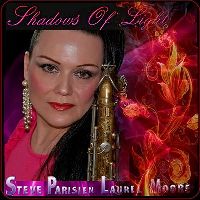
– At 6* in JAZZ GLOBALLY at Reverbnation With 136,000 hits on our songs: Steve Parisien.
Courtesy of Indie on the Move
**Guest post written by David Priebe of Green Room Music Source, a full time agent/artist manager and also part time instructor of music business at the Institute of Production & Recording in Minneapolis.
“It’s official- it’s now impossible to make money in the music industry.”
There are scads and scads of articles and commentary that sound a lot like that statement. What you hear much less about are the people who completely disagree with that sentiment. I’m in that camp, and I’m going to tell you why.
When I was in high school contemplating a career in music, I would frequent the local music store and pawn shops that had guitars and dork out over the gear. Every once and a while I’d bump into this coked-out sound guy who’d lurk around the same places. He’d come out of nowhere and warn me not to get into the music business like a haggard sailor always making foreboding statements about the devilish sea. That was 1995. Being young and ambitious, I paid him no mind.
Through the years, I’ve run into many other people who have shared similar sentiments with me. Some of them veterans of the industry who got out, but most are people who tried and failed or had rather brief stays in the music business. Sometimes people who left long ago look at the way things are and wonder how people still make money. I’ve been working here and there in music since I left high school, but it wasn’t my primary source of income until after the digital revolution- so I don’t have a huge basis for comparison, but I do know I’m seeing a measure of success right now. I’ll tell you what I attribute that to- Really, it’s simple. It’s all business. Here are a few simple guidelines you can follow to stay out of trouble: Plan, expect change, and make smart decisions. (and I know how lack luster and basic that sounds, but it’s simple things like that that are behind the failure of most business regardless of industry.)
Before you look at how to make money, let’s look at the state of the industry. Is there demand and consumption of music? Yes. In fact, there’s more consumption of music now than there ever has been thanks to the ‘treacherous’ internet. But, is there still money being made? Yes. In fact, in 2012 global revenue was 16.6 billion dollars. While that’s down slightly overall, there were rises in some places in the industry such as synch revenue and even digital sales. So if the market is still demanding music and there is still a lot of money being made, then it would stand to reason that there must be a way for you to go out there and claim a piece of that pie, right?
Shrinking revenue isn’t something encouraging to most people, especially not when you presume that means that it will continue to shrink until it reaches zero and musicians spend thousands of their own dollars to entertain as slave labor- but that’s simply not realistic. People enjoy music, and they still are willing to pay to enjoy it. However, their ideas of how to value certain products have changed to a degree.
So let’s start back at the beginning; you want to have a career in the music industry, what are you going to do to make money? …specifically that is. You want to be an artist? What’s your business plan (and a business plan doesn’t always need to be a 50 page formal document) for how you’re going to get where you want to go? If you’re internal response to those sentences is “who, what?” or “this is boring” you’re probably not going to do that well. Too many artists wait until they’ve been playing for years unsuccessfully before they start worrying about the fact that they’re not making any money, or gaining ground on their career. Then they start panicking, or conclude the industry is fixed against everyone and there was no way to win in the first place. Well… if that’s the case, it would be smart to do a little digging and figure that out before wasting all your time. Fortunately it’s not true. Bring this back to basics again for a second
Anyone with any kind of background in business will tell you that things changing is the fundamental constant in the business world. People who don’t expect it, predict it, anticipate and prepare for it have no control, whatsoever, over their business’s future. Music isn’t the exception, and it’s not even the poster child, it’s just an industry like any other. It’s, of course, smart to repeat successful ideas and hope for similar results, but I think it’s incredibly dangerous for rely on the repeating of ideas to bring continued success. In fact, the saying, ‘If you’re not moving forwards, you’re moving backwards,’ is more than rhetoric. The growth and expansion of a business should always be the primary goal, but it’s also the thing that keeps them from failing. This is how major labels shrank and why there are more and more successful indie labels. The former banked on owning the blueprints for how the business operated. They were so greedy that when things changed, rather than finding new avenues to replace revenue, they fought to preserve the old ones. But you can’t tame the market (at least not completely.) Indie labels have been successful because they embraced the changes, understood them, and, most importantly, built businesses that were limber and could change again quickly if needed.
Finally, the most obvious and least recognized fundamentally good idea in music: make good decisions. People, especially musicians, can quickly get blinded by their obsession to succeed and make horrible decisions. Big and small. Once you’ve made a plan you should have short-term and long-term goals for your band, business, or career. Every single decision – every one – should be a part of reaching one of those goals. If it’s not, don’t do it. Likewise, every business takes risks, but you need to make sure you limit your expose to things that can be harmful to your goals. Look at something with a critical eye and ask how likely it is that the risk will pay off, and how big will that payoff be? If it doesn’t work out, how much will that failure damage the business?
And, if you’re thinking that all of this general information is great, but doesn’t tell you exactly how to still make money in music then you’re missing the point. If you legitimately can’t figure out a way to make money in music than you shouldn’t invest in a career here. Too many musicians think that making the music is their only job. Hopefully you’ll get to a place where that is your only job, but until then you’ll need to be a jack of several trades, including the trade of being a businessman/woman. If you don’t have any business acumen and you have no one else to rely on- then go get some. Intern with someone who does have a good grasp on those things, or go to school, or hire someone to consult with you…
The music industry has always been incredibly hard to break into at all levels. It’s a “glamour” industry. That’s one thing that isn’t likely to change. What I mean by that is there are a disproportionate number of people who want a roll in the industry just for the sake of being able to reap the rewards people expect from a business like this- fame, glory, power, bragging rights… sex, drugs, and rock and roll… And people are willing to put up with just about anything to get what they want. (But, while being persistent is great, it’s not the same thing as being smart.) This isn’t anything new at all, and it doesn’t mean the industry is in a state of collapse.
Here’s the thought I’d like to leave you with. I hear more and more about people not bothering to print CDs or even try to sell them. People are spending money to record great music and then giving it all away online as “promotion.” This is the worst idea I’ve ever come across. If you want to give away some music, do as you will- things like Spotify and Rhapsody are close enough for me. But even if you do, still leave an avenue for people to pay you if they want to. That’s the one thing that the sales numbers don’t tell you. Lady Gaga’s sales numbers from Walmart going down likely has zero relevancy for your career. There’s not much reason that your band can’t sell the same number (or more) as last year or the year before- because you’ll sell them at live shows, and the people who buy them are doing so specifically because they want to support your music. If you play shows all the time and no one ever buys anything… the state of the industry isn’t your biggest problem.
– See more at: Indie on the Move

In the “old” days an artist manager could pick up a talented artist or band. The manager could then pitch them for a “record deal” that included artist development where the record label would put them in a recording studio to record their album. Then the label would hire publicists, give them tour support with a well-known artist. The label would put them out to radio and TV show appearances. The label would pay for all costs in the hope of recouping what they spent on the artist. But that was the “old” days.
Record Label deals do not exist anymore at least not the ones of old. Read this interesting article about the function of record labels.
We have been involved in managing some of the biggest artists in the world over the last few decades. But it’s a different game out there now. How many times have I heard “Believe in my music.” Believing and making the artist into a worldwide musical entity is a process involving contacts, experience and strategic skill.
There is no one out there going to discover anyone anymore. It’s a business, it’s your business as an artist. Businesses require a business plan that has to be enacted to achieve success. Yes, there is all kinds of social media out there. But social media will only take you so far. This does help and if you are really lucky you may have a YouTube video that will go viral. But I would not depend on luck. Nor would I advise just because you’re good that you will make it as an artist.
There are all kinds of levels of success. One level is to be popular in your local area. But if you want to tour successfully, gain a worldwide fan base you will need support. After all, who wants to go out to see an artist they have never heard of?
Like any other business you will require all the tools the record labels once provided. Unfortunately it is now up to the artist to acquire the funding to pay for all those services. Just recording a great album is not enough. Radio Airplay is still very relevant, read these two articles. Does Airplay Matter? by Kristin Thomson Just how important is radio airplay? by Frontside Group The article quotes “When talking about breaking artists and general mass appeal, it’s easy to say that you can’t create a superstar act without radio.
If you are good enough you need to find an experienced, savvy manager. One who knows the game and can maneuver you on the game board to the finish line. But be prepared to have the funding to do so. You can start with baby steps and maneuver yourself slowly up the rung of success. But like any other business it will require start up capitol and then for you the dividends back into your business. The business of your music.
By: Stephen Wrench
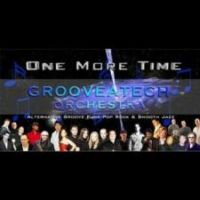
Grooveatech, with their release of One More Time, has already charted across the US:
BILLBOARD/ BDS CHARTED AC # 30
BILLBOARD/BDS CHARTED SMOOTH AC # 8
MEDIA BASE CHARTED AC# 33
MEDIABASE CHARTED SMOOTH AC # 19
FMQB CHARTED AC # 8
AMERICA AMUSIC CHARTS AC # 33
The single track is now released to a world radio campaign with Musik Radio Promotions and on the fast track to global charting.
This musical “dream team” was reviewed recently by Stu Berketo.
There are many who have long criticized the ‘smooth jazz/groove’ genre for lacking innovation, freshness, and a hip sound to attract a younger generation of fans. I can’t say I entirely agree with that sentiment, but for any of the critics who do, now would be the perfect time to introduce them to the sound of Grooveatech Orchestra.
This exciting and innovative new outfit is the brainchild of Long Island, New York based Aaron Wider, who until recently has fallen under the radar of the music genre with his spectacular ‘super group’ or better still, musical dream team. While Wider is the producer, arranger, and lead vocalist on the album One More Time, he has assembled the most recognizable names and talents to contribute to his project. Among them, Chieli Minucci, Special FX, Marc Antoine, Phillipe Saisse, Jeff Golub, Slim Man, Marc Antoine, Greg Adams, Jeff Kashiwa, Ken Navarro, Chris Standring, Matt Marshak, as well as a host of ultra-talented musicians, who along with the aforementioned names, remotely recorded their tracks before Wider’s genius production skills were put to work.
To explain just what is Grooveatech Orchestra, look no further than the CD cover with its congregation of stars: alternative groove, funk, pop, rock, and smooth jazz. The title track is a beat driven, synth-heavy masterpiece that is stylish and chic and a potential ‘club hit’ complete with Wider’s perfectly laid vocal tracks that bring back the mystique of the electronica era for those of us who lived through it and enjoyed it. The beat and tempo is just as kicking on Let Me Change with its cool and melodic hooks and grooves and some of the best guitar solos you will ever hear. While One More Time stays true to its description on the CD cover, Wider produces a very pretty yet smoothly produced and up-tempo offering on Rainbow, a gently sung and reflectively written tune that fits in perfectly with the rest of the innovative work on the album. Wider and Dora Nicolosi partner up vocally for what could be called a beautiful ‘soul-tronic’ and heartfelt medium tempo track titled I Remember,backed up by the incredible guitar work of Antoine, Marshak, and Golub and Saisse’s remarkable keyboarding.
Grooveatech Orchestra with its all-star lineup of first rate talent and song writing could be the catalyst for bringing new, ground breaking sounds into the smooth jazz fold. One More Time is a perfectly orchestrated soundtrack for anyone needing a fresh, hip and stylish injection of one of the newest and creative sounds today.
Courtesy of: wave.fm
Inusa Dawuda a.k.a the “Black Pharaoh” is a multi-talented singer, songwriter, saxophonist, and entertainer. His diverse range as a performer has been the catalyst behind his international success.
‘Rumours Digi Digi’, ‘Down Down Down’ ‘Morning Light’ and ‘Rub-A-Dub-Girl’ are just some of the past tunes that have been grooved by the charming ragga flavours of Inusa’s vocal talents, leading him to enjoy support through the playing of his recordings by some of the biggest house giants like Erick Morillo on “Going Back To My Roots” and radio rotations worldwide of his radio friendly tracks.
Having kicked off 2009 – 2010 by being crowned officially “Russia’s and C.I.S territory most successful foreign artist”, where to-date his single Whizzkids feat. Inusa Dawuda – ‘Rumours-Digi Digi’ has received millions of radio plays, Inusa beat a stream of fellow foreign artists to achieve this accolade that includes Lady Gaga and David Guetta.
He has also been quick and wise enough to translate this popularity into live appearances all across Europe, having topped the bill at some of the the most prestigious party venues accross the world.
Inusa Dawuda has his work released on recording labels from BMG to Universal Music, Pacha Recordings, Tiger Records- Kontor Records, Hed Kandi to Kingdom of Music with his summery sounds having captivated a loyal fan base throughout Germany, Russia, Turkey, Austria, Ukraine, Poland, Albania and many countries accros the Globe. The increased popularity for his music has spread to widen his appeal in many countries where his music is finding its way onto playlists and club charts.
Inusa’s persona both as a studio artist and live performer confirm him as one of the most sought-after artists in the house and club music genre. Inusa Dawuda has also enjoyed success in the smooth jazz / chillout music genre with some of his house hits like ‘Morning Light’ and ‘You Are’ covered to cross-over as beautiful ballads. Along with soothing instrumentals like ‘Reflections,’ ‘Waterfalls,’ and ‘African Nights,’.
His talents as an inspired vocalist, saxophonist and performer reveal an amazing musical versatility that commands the attention of audiences across the world.
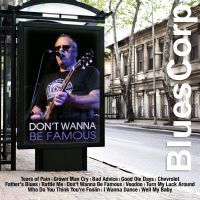
BluesCorp, a rock’n blues-funk dance band from Australia’s Gold Coast, is rock’n on several BBC networks and stations worldwide with release of their new single, ‘Rattle Me’. This is BluesCorp’s second release with Musik Radio Promotions as ‘Who Do You Think Your Foolin’ was released several months ago.
The band was formed in 2010 by guitarist/singer/songwriter Andrew Clark, as a project for developing his own original music. Andrew’s trademark warm, earthy guitar tones, combined with his intimate and emotive vocal deliveries are the heart and soul of the BluesCorp sound. He creates a real rush of energy in his music and has been a “white boy lost in the blues” since his first working band – a 1977 project with blues guitarist Andrew Silver (Dynamic Hepnotics).
In April 2012, Andrew decided to completely rebuild the BluesCorp live band as a 4-piece line-up ahead of returning to the studio for the second album. The new line-up, featuring Jason Klaffer (bass), JJ Otene (drums) and Ben Ferguson (guitar/keys/sax) brought with it a fresher and decidedly funkier sound. Additionally, Andrew also recruited some additional players to rotate in the line-up as circumstances dictated.
Regular live appearances from guests Matt “Harp Dog” Dunn (harmonica), Steve Sinclair (guitar), Brian Elliott (sax), Gil Rasmussen (drums) and Paul Sumner (harmonica/percussion) resulted in contributions from each of them in the studio for the 2013 BluesCorp album release “Don’t Wanna Be Famous”.
“Don’t Wanna Be Famous” has been released to rave reviews:
“The Blues Association of South East Queensland (BASEQ) has selected BluesCorp’s 2013 album “Dont Wanna Be Famous” as it’s nomination in the “Best Self-Produced CD” category for the upcoming International Blues Challenge awards to be held in Memphis early next year.”- Blues Association of South East Queensland (Oct 16, 2013)
“From the start to the end of the album ‘Don’t Wanna Be Famous‘, my foot was a tapping. BluesCorp has delivered a cracking CD. This CD will be in the charts for many weeks and on high rotation on the Fatman Blues show on Southern FM”.- Mick Todd, Fatman Blues, Radio 88.3 Southern FM (Mar 15, 2013)
“Just got hold of the latest release from Bluescorp. This is one that makes you want to play it again and again. A great sound mix with quality production laced with sax and harmonica full of soul ,and a killer guitar tone.”- Barry Maxwell, Blues On The Hill, Radio 3NRG 99.3 FM (Mar 07, 2013)
“Smooth, low down contemporary blues at it’s best.” – Dave Barker, Dave’s Blues Mix, StarFM Radio 98.5 (Mar 04, 2013)
Musik Radio Promotions is proud to present such a seasoned, well-polished band to world-wide radio.
.
Akua Kamua is living the Jamaican dream of making music for the world to hear and enjoy. Kamua has been released to the world by Musik Radio Promotions and is enjoying a welcoming audience to three of the seven tracks on his new EP, ‘My Island Darling‘.
Clocking in at 7 songs of high quality, the new EP from Akau Kamau is a release that is formed around the themes of Jamaican and African traditions and, in the artist’s words, ‘Ancestral Reverence’.
Kamua states, “The inspiration for the theme came about as a way to respect our heritage. My music is both aural and cerebral. I attempt to create songs which speak for themselves, however as is the case with instrumental music, the tempo, instrumentation is used to convey this message”.
Formed on the belief that generally our ancestors exist around us in the spiritual realm, these songs are designed as a tribute to the sacrifices that they made, in order for us all to have the opportunities that we now enjoy.
Operating on several levels, the seven songs on the EP are each written with a message in mind, allowing each listener to develop their own appreciation and interpretation for each song even more so if the sleeve notes have been read and understood. It makes for a different experience for each listener, especially if they are aware of the undercurrent for each song.
It’s an innovative approach, and impressive from an artist who wrote, recorded and produced the tracks all under his own steam. With a search now running to expand the band and take the project forward, this is a promising time for Akua Kamau.
Musik Radio Promotions is happy to be a part of this “promising time”.
Rootstime loves playing artists from Musik Radio Promotions as well as many stations and networks around the world.
Check out what Rootstime has to say about Musik Radio!
“We at Rootstime welcome releases at your label or in your distribution portfolio. We promise to give the albums the best possible attention and provide a good promotion via our website and via airplay.”
Be empowered! You CAN get your musik heard! Contact Musik Radio Promotions for your worldwide campaign to 104 countries.
Joe Smith, past president of Warner Bros. Elektra/Asylum, and Capitol Records, says, “with today’s rules, I couldn’t sign the Grateful Dead”.
Musik & Film Records changed the rules to create a new model for indie artists.
Five industry mogels provide a powerful insight into the music industry in the article below, courtesy of Hollywood Reporter. Great to know Musik and Film is on the same page!
It hasn’t been a pretty picture for the record companies the past 15 years. In that time, the U.S. music business has shrunk in half, from revenue of $14.6 billion in 1999 to $7.1 billion in 2012, and that’s been reflected in job losses, consolidation of seven music giants into three and a general feeling of malaise that says the industry’s glory days are an irretrievable thing of the past. Indeed, the landscape is littered with former executives bemoaning the loss of expense accounts and cocaine- and hooker-fueled days, but not these spry veterans, who have survived this brave new digital world to tell their tales.
Jerry Greenberg, Atlantic Records president (1974-80), MJJ Music president/COO (1993-2000)
THEN: Signed ABBA; connected producer Mutt Lange with AC/DC (the result: Highway to Hell); broke Led Zeppelin on U.S. radio with “Whole Lotta Love”; signed Chic, Sister Sledge and The Trammps.
NOW: Founder of Ibiza-based label Pacific Electronic Music; spearheading documentary about his career.
NEXT: Involved with the Polyphony Foundation, a music school in Nazareth where kids from both Israel and Palestine learn together. “I love music and working with artists. I can still tell a hit when I hear it. I want to find the next Lady Gaga and Justin Timberlake.”
WHAT HE MISSES: “Labels signing artists, developing them and waiting for the money to come later. Record companies don’t stick with artists as much as they did back then.”
WORDS OF WISDOM: “This is as great a time to be a small, independent label as it was in the ’60s.”
Mike Bone, Island Records president (1990-91), Mercury co-president (1991), Def American Minster of Truth (1992-94)
THEN: While a promotion exec, broke Thin Lizzy in the U.S. with the single, “Wild One.”
NOW: Graduated Loyola Marymount with an MBA in marketing and a 3.93 GPA; owns homes in Santa Monica and Encino, a condo in Atlanta and a 215-acre Georgia tree farm.
NEXT: “In five years, my daughter will be a senior in college and my son will be a freshman, so I will start divesting my real estate, and prepare to move to Hawaii with my wife.”
WHAT HE MISSES: Being part of a team and moving the ball down the field, the snap, crackle and pop of the business, the camaraderie of orchestrating the whole ensemble. “My best years were atBob Krasnow’s Elektra in the ’80s, a magical time.”
WORDS OF WISDOM: “I saved my money. I didn’t put it up my nose or get divorced three times. My vices are now my kids.”
STORY: Afrojack Signs With Island Records and Universal Music Group
Joe Smith, Warner Bros. Records president (1970-75), Elektra/Asylum (1975-82), Capitol (1987-93)
THEN: Built Warner Bros. with Mo Ostin; signed the Grateful Dead and “changed the industry perception of the record company as the home of Frank Sinatra and Dean Martin”; helped breakGarth Brooks; wrote Off the Record, a collection of more than 200 artist interviews now archived in the Library of Congress.
NOW: Lakers season ticket-holder, avid wine and art collector.
NEXT: “I hope to continue standing above ground.”
WHAT HE MISSES: That collegial feeling which disappeared when the business got corporate. “You rooted for your competition to have a hit because it meant increased retail traffic for everyone. We were never really competing with each other, we were all trying to make our own way. I also miss going to the NARM [National Association of Recording Merchandisers, since renamed the Music Business Association] convention, where I got to see everybody from around the country, where I emceed several of the award dinners and panels. I really felt at home.”
WORDS OF WISDOM: “There was room for everybody then. With today’s rules, I couldn’t sign the Grateful Dead.”
Phil Quartararo, Virgin Records president/CEO (1992-97), Warner Bros. president (1997-2002), EMI North America executive vp (2005-06)
THEN: Part of the Island Records team that broke U2; One of the founding executives of Virgin U.S.; signed Linkin Park and Josh Groban while at Warner Bros.
NOW: Managing Arturo Sandoval and Yoshiki at The Collective (the latter with veteran publishing and A&R exec Kaz Utsunomiya); consulting for artist estates and businesses that look to “use music for currency, and are willing to pay for it,” including Australian brand-sponsored e-commerce platform Guvera and sync recognition app Shazam. “I have been very fortunate to be able to take my 30-year record company experience and convert it.”
NEXT: “I’m not one to sit around moping and being resentful, waiting for the phone to ring. I’m looking at the first part of my career as the launching pad for the best part, which is right now, because I get to work with artists, brands and music. That experience we had in the major label system is valuable for companies today. There are not a lot of guys around who have run multimillion-dollar companies and are still young enough to have the energy to do something else.”
WHAT HE MISSES: Being able to activate a team of people working every day toward a common goal: to break an artist or a song, to build a career. “That was art; that was beautiful. Today’s market is not conducive to record companies as we knew them. They’re overwhelmed and under-resourced, which is a bad combination. The major labels of the past had the revenue to support the effort. [Now] there’s no money to do anything. And the thing that suffers the most is artist development. If you’re a new band, and can’t get any traction on your own, the record company won’t be able to do it for you.”
WORDS OF WISDOM: “The time for new opportunity in the music industry has never been better.”
Jeff Gold, A&M vp marketing/creative services (1981-90), Warner Bros. Records executive vp/GM (1990-98)
THEN: Helped break Bryan Adams; won a Grammy for art direction for Suzanne Vega’s third album.
NOW: Founder of Recordmecca, collecting and selling rare memorabilia; author of 101 Essential Rock Records: The Golden Age of Vinyl; consulting for Rock and Roll Hall of Fame and Experience Music Project.
NEXT: “I am going to do this for as long as I enjoy doing it. I wake up every morning and can’t wait to see who’s emailed me and from where, what I’ve sold. I engage in this fantastic treasure hunt where I get to meet super-interesting people, buy stuff from them they’ve had for a long time, research and contextualize it.”
WHAT HE MISSES: The expense account.
WORDS OF WISDOM: “The record business missed the boat on the Internet. It’s a real lack of vision. People aren’t doing the Steve Jobs leading thing in the record business.”.
For a consultation regarding how Musik and Film Records can help you, free of obligation, contact us today.
Rootsy rockn’roll, tinged with blues & alt-country, from Australia, Little Rain pulls you into the emotion, pathos & life of Steve Roach’s songs brought to life by Australia’s fiddle legend Marcy Taylor, great guitar licks & Steve’s evocative vocals. Guitarist Adam Roach on lead guitar is one of the best players to come out of Melbourne. Multi instrumentalist Christopher Sprake plays guitar, keys , percussion and drums. Journeyman bassist Mark Nolasco and talented and eclectic drummer Matt Laing keep it all in a line, with Richard De Kleyn on Piano. Keeping it in the family is Ebony Roach, Steve Roach’s daughter, and Kristy Mellish, his sister. Sarah Clarke, a regular face on television and stage rounds out the threesome on backing vocals.
Little Rain has just released their second album A Long Time Coming following the successful The Revelation, which saw the band get signed to USA record company Musik and Film Records.
Musik Radio Promotions has recently released the singles, Darkness and Salvation, to worldwide radio. The response has been enormous, with the largest radio network in world immediately picking up the band for airplay, The BBC.
Playing an eclectic mix of Rock, Alt-Country, Blues, Folk and Americana, Steve Roach and Little Rain always make you feel you’re hearing something new, but familiar at the same time. Soulful, gutsy, Rockn’roll.